






Download Product Data
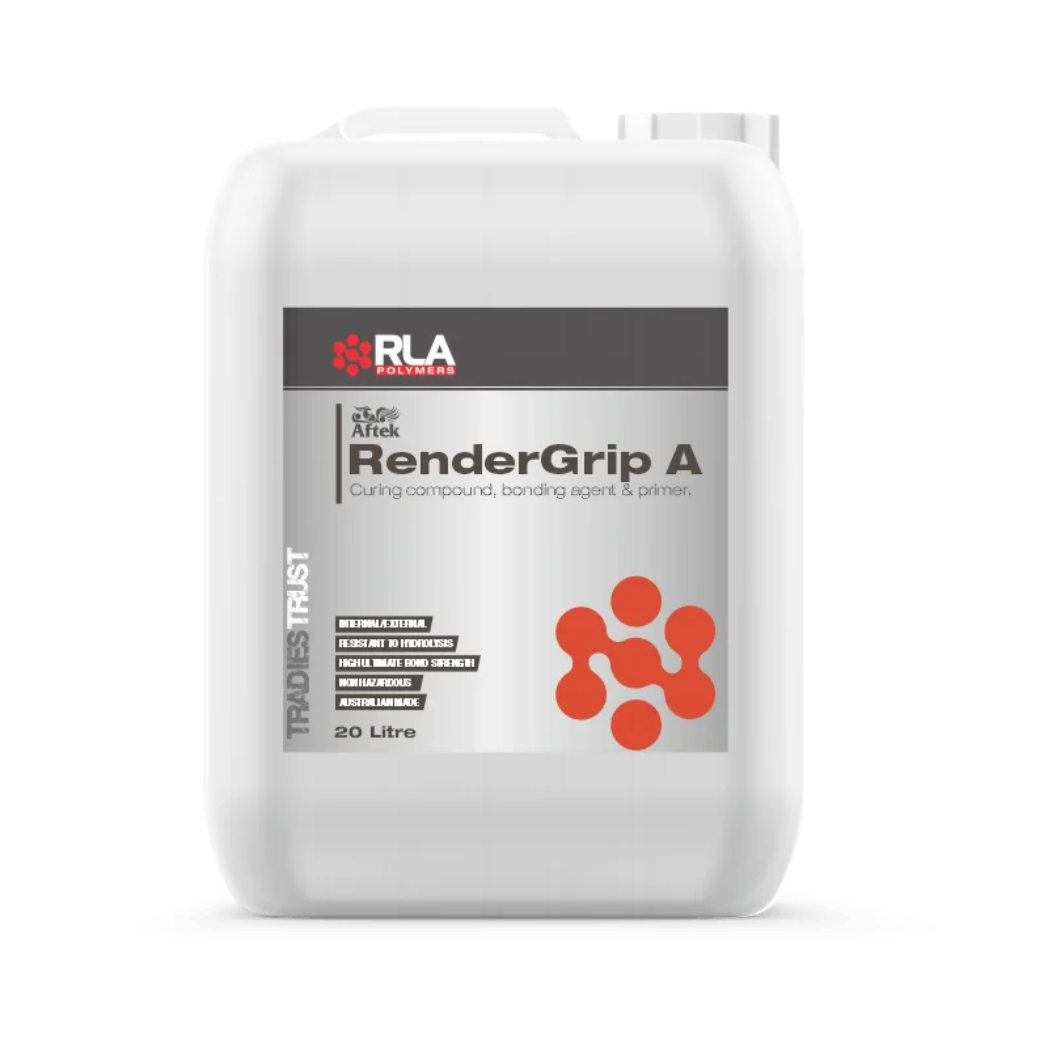
RLA Rendergrip A is a single-component acrylic concrete repair primer, bonding agent and curing compound for concrete reinstatement. It promotes adhesion between prepared concrete and compatible RLA repair mortars, including on vertical and overhead surfaces. It can also be used to reduce premature moisture loss from freshly finished repair mortar.
Where to use Rendergrip A
- Bonding new concrete to existing concrete.
- Priming prepared concrete for RLA repair mortars.
- Sealing suitable concrete surfaces.
- Curing freshly finished RLA repair mortars where specified.
- Internal and external repair work, including horizontal, vertical and overhead applications.
Choose the right concrete repair system
Select the repair mortar to suit the repair depth, orientation and project requirements: Penapatch HB80, Penapatch HB50, Penapatch Panel LW or Penapatch Fairing Coat Mortar. Where exposed reinforcement requires corrosion treatment, prepare the steel and use RLA Zinc Primer as specified. Rendergrip A is not a substitute for reinforcement corrosion protection.
Coverage and pack selection
Allow approximately 4–5 m²/L for a single primer coat, depending on surface porosity.
- 5 L: approximately 20–25 m².
- 20 L: approximately 80–100 m².
Allow extra material for porous substrates, additional coats, curing applications and wastage.
Application essentials
- Remove unsound concrete and contaminants. Prepare the repair perimeter with a 10 mm deep saw cut where required to avoid feather edges.
- Thoroughly pre-wet the substrate and remove free water.
- Brush on Rendergrip A undiluted. Allow it to become tacky before placing repair mortar, typically 10–20 minutes at 20°C and 50% relative humidity. Do not leave it to cure for longer than 8 hours before applying mortar; recoat if this window is exceeded.
- For very porous concrete, a second coat may be required after the first has dried. Avoid excessive primer on vertical and overhead surfaces.
- When specified as a curing compound, apply to the finished repair mortar immediately after final trowelling.
Apply within ambient temperatures of 2–35°C and substrate temperatures of 5–35°C. Protect the repair from direct sun, rain, wind and frost. Follow the product data sheet and project-specific repair instructions.
What is Rendergrip A used for?
It primes concrete before compatible RLA repair mortars, bonds new to existing concrete and can be used as a curing compound on freshly finished repair mortar.
How much Rendergrip A do I need?
At 4–5 m²/L, a 5 L container covers approximately 20–25 m² and a 20 L container covers approximately 80–100 m² for one primer coat. Allow extra for porosity, additional coats, curing and wastage.
Which repair mortars can I use it with?
RLA Penapatch HB80, HB50, Panel LW and Fairing Coat Mortar, subject to the selected mortar instructions and project requirements.
Does Rendergrip A protect exposed reinforcement?
No. Use the specified RLA Zinc Primer for prepared exposed steel where corrosion treatment is required.
Should it be diluted?
No. Apply Rendergrip A undiluted.
When should repair mortar be applied?
Once the primer is tacky, typically 10–20 minutes at 20°C and 50% relative humidity. Do not leave it to cure longer than 8 hours before applying mortar; apply a fresh coat if that window is exceeded.
- Concrete.
- Cementitious repair substrates.
- Prepared concrete repair areas in vertical, horizontal and overhead applications.
RLA Primer Rendergrip A Physical Properties
| Property | Value |
|---|---|
| Base Chemistry | Acrylic |
| Form | Thin liquid |
| Specific Gravity | 1.06 g/cm³ |
| Component | Single |
| Primary Function | Concrete repair primer, bonding agent and curing compound |
| Key Performance | High bond strength, hydrolysis resistance |
| Viscosity | 450–500 cP |
| pH | 8.5–9.5 |
| Chemical Resistance | Resists alkalis, mild acids, sulphates, chlorides and sugars |
| Solubility in Water | Soluble in water |
| Water Absorption | 12% after 24 hours |
| Bond Strength | >1.5 MPa |
| Minimum Film Forming Temperature | 3°C |
| Minimum Substrate Application Temperature | 5°C |
| Coverage | 4–5 m²/L (varies with substrate porosity) |
| Colour | Milky white (wet); clear (dry) |
| Tacky bonding stage | 10–20 min at 20°C and 50% RH |
| Maximum bonding window | 8 hours; reapply if exceeded |