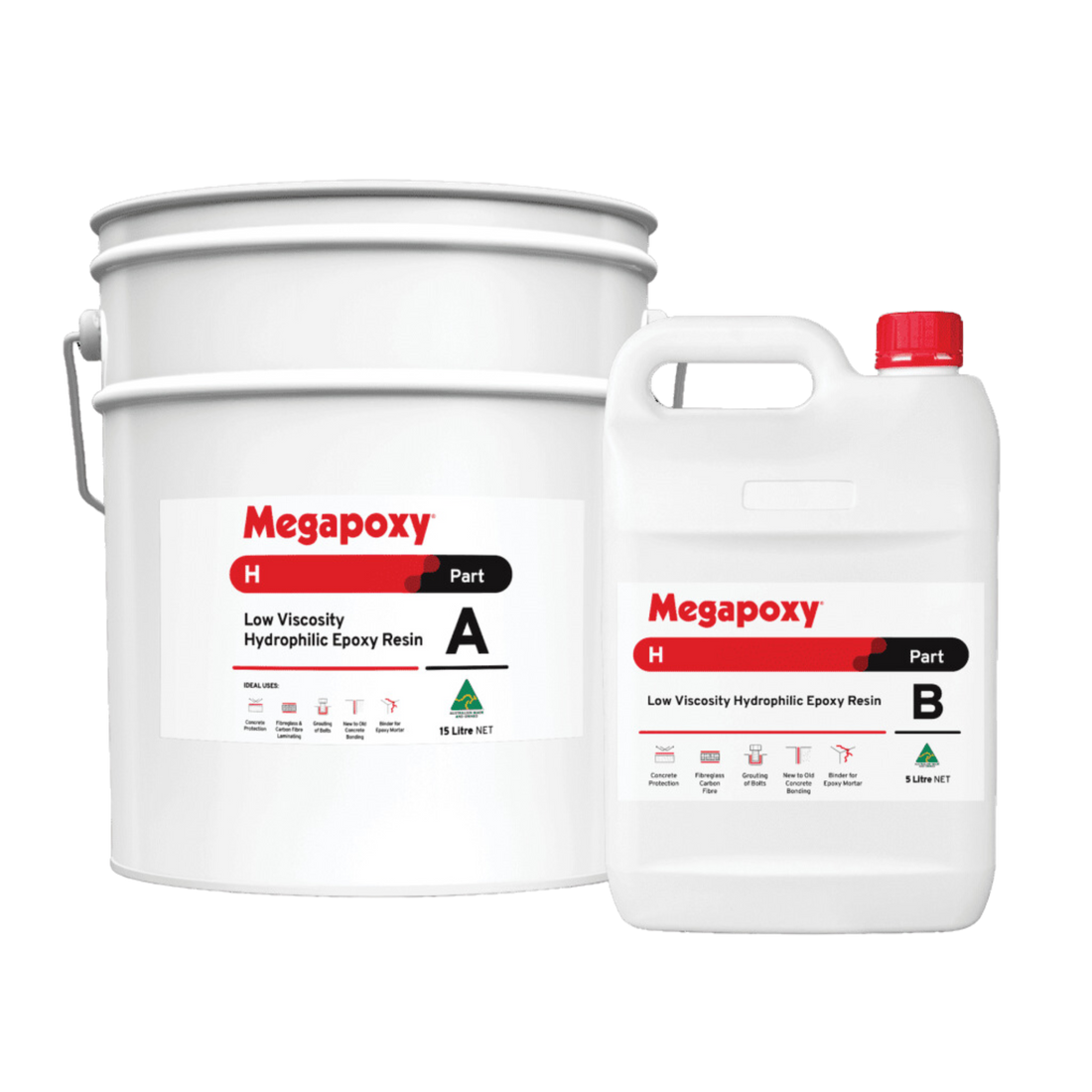
When structural concrete and steel repairs demand reliability in the most challenging conditions, Megapoxy H delivers. This low-viscosity, hydrophilic epoxy resin handles critical bonding, crack repair, and high-strength mortar applications, even in potable water or submerged environments. It ensures durability and compliance where other solutions fall short.
Why this product exists
Megapoxy H is engineered as a low viscosity, 100% solids, solvent-free, hydrophilic epoxy resin. It provides robust structural repair, bonding, and high-strength mortar solutions. This formulation addresses the need for materials that maintain integrity in critical environments, including contact with drinking water and exposure to aggressive chemicals like hydrogen sulphide. It establishes strong, permanent bonds between new and old concrete, repairs cracks, and is suitable for underwater and splashzone applications.
What it's like to use
Megapoxy H requires precise mixing at a ratio of 3 parts A to 1 part B by volume. Thorough mixing for a minimum of three minutes is critical for optimal performance. Once mixed, it offers a 30-minute work time at 25°C, allowing sufficient time for placement, pouring, or injection. Minimum application temperature is 10°C.
Surface preparation is key for maximum adhesion. Concrete surfaces must be clean, free from grease, oil, and laitance. Mechanical abrasion (scabbling, grit blasting, or grinding) is preferred. If not possible, acid etching can be used, followed by thorough washing and 24 hours of drying. Metal surfaces require grit blasting to AS 1627.2.2002 or mechanical abrasion to a clean, bright finish, followed by degreasing. All existing coatings should be removed to ensure superior bond strength. For cleaning tools and implements, use Megapoxy Thinners.
How it fits in a real system
Megapoxy H frequently serves as an initial and critical step in comprehensive concrete repair systems. It is applied early in the sequence, either as a primer or for crack injection, establishing a strong foundation before subsequent layers. For example, in concrete repair, it acts as a primary bonding agent for new-to-old concrete or as the injection resin for structural crack repairs.
This product is often specified alongside companion products like coloured epoxy floor epoxy base coats in plant rooms, where it primes the concrete for trafficable epoxy finishes. For more extensive concrete patching, it can be paired with epoxy concrete patch rapid concrete repair paste or epoxy surface sealant joint band adhesive for detailing and capping cracks.