





11
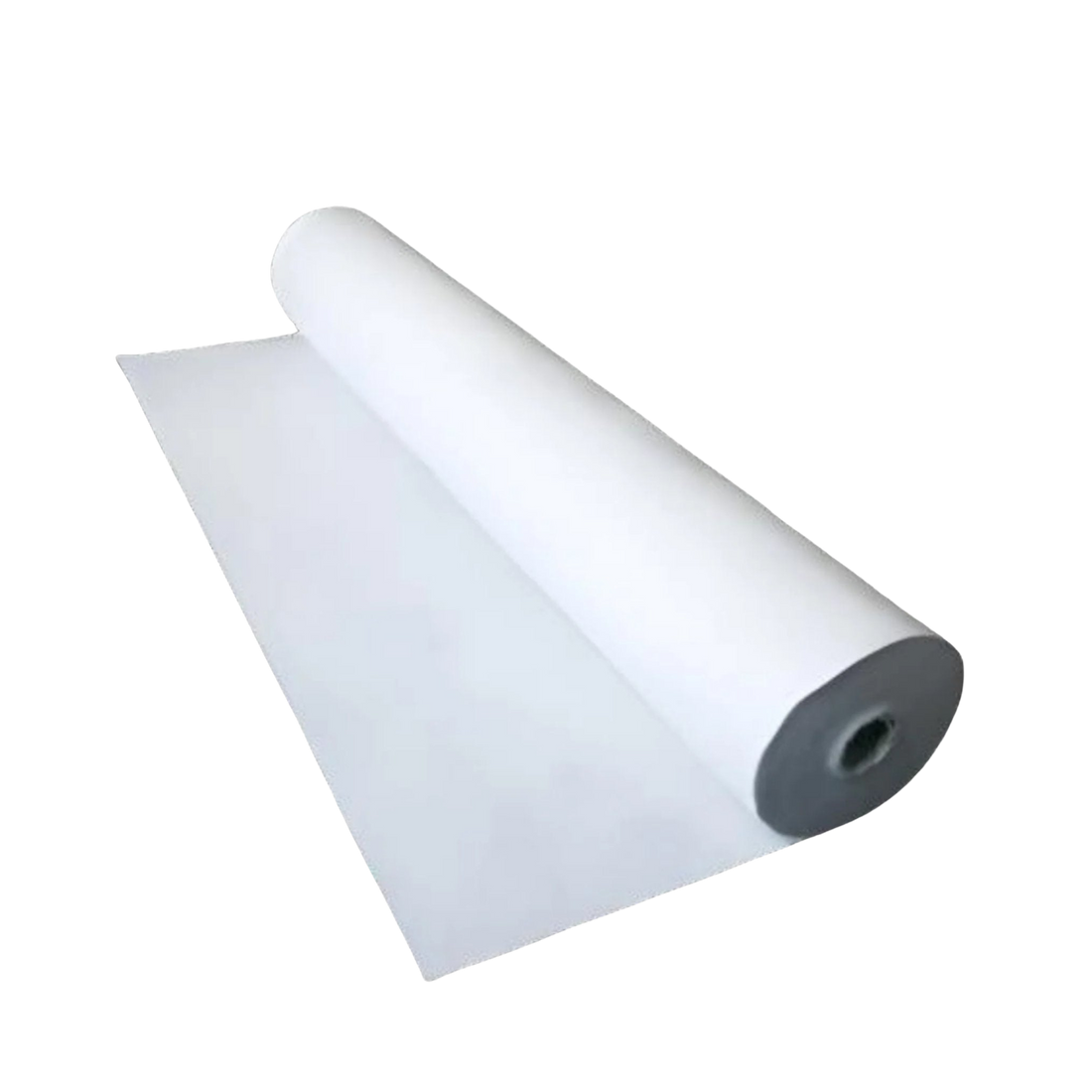

To stabilise coastal structures, protect landfill lining systems, and reinforce ground in the road, water, coastal, and waste sectors, Terrafix Geo Textile 2m Wide (Texcel R) provides a high-elongation barrier that minimises installation damage and maintains close soil contact. This non-woven staple fibre geotextile is manufactured in Australia from 100% virgin polyester fibre to deliver consistent mechanical and hydraulic performance under demanding site conditions.
Protection for impermeable lining systems
When used in landfill lining systems, the geotextile cushions the barrier by significantly reducing the physical forces placed on impermeable liners. This cushioning effect protects the liners from puncture and stress in both the short term during construction and over the long term under high waste loads. The high elongation properties allow the fabric to conform closely to uneven ground profiles, securing effective soil contact and interface stability without tearing.
Tested durability in harsh environments
Texcel R is engineered to retain its mechanical and hydraulic properties when exposed to environmental stresses, chemicals, and construction wear. The 100% virgin polyester fibres are tested under Australian Standards (AS 3706) to verify performance against physical degradation. The material resists abrasion from moving aggregates, retains more than 90% of its strength when exposed to hydrocarbons such as diesel, and maintains its filtration and permeability paths under high pressure.
Numbers that matter
- 100% Virgin Polyester Fibre: Provides consistent chemical resistance and physical stability without recycled contaminants.
- >90% Hydrocarbon Resistance (AS 3706.12): Retains almost all structural strength when exposed to diesel, making it suitable for waste sectors and roadside environments.
- CBR Burst Strength (AS 3706.4): Ranges from 2,750 N (400R) up to 8,850 N (1200R) to resist puncture from sharp aggregates during backfilling.
- Pore Size O₉₅ (AS 3706.7): Standardised at ≤75 µm across all grades to prevent fine soil migration while allowing water to pass.
- Flow Rate @ 100mm Head (AS 3706.9): Ranges from 141 L/m²/s (400R) to 30 L/m²/s (1200R) to match the drainage requirements of the specific site design.
Limitations
Site-specific environmental conditions can affect the required mechanical and hydraulic specifications. Contractors and engineers must verify the correct Texcel R grade (400R, 600R, 900R, or 1200R) to ensure the tensile strength, CBR toughness, and flow rates match the project design. Standard engineering assessments should be completed prior to installation to account for local soil chemistry, slope stability, and hydraulic loads.
Frequently asked questions
What are the primary uses for Terrafix Geo Fabric?
Terrafix Geo Fabric is used for soil filtration, separation, and drainage in civil engineering, coastal stabilisation, and landfill lining systems. It prevents soil particle migration while allowing water flow, crucial for long-term project integrity.
How does Terrafix Geo Fabric protect geomembrane liners?
It significantly reduces stress on impermeable liners by distributing loads and preventing puncture from aggregate. This protection is vital for maintaining the integrity of landfill and containment systems over time.
Is this geo fabric suitable for coastal or exposed environments?
Yes, Terrafix Geo Fabric offers high abrasion and UV resistance, making it suitable for stabilising coastal structures. This ensures durability in harsh environmental conditions where exposure is constant.
What are its hydraulic properties?
Terrafix Geo Fabric provides optimal pore size and permeability for effective filtration. It has a coefficient of permeability ranging from 20 x 10-4 m/s to 48 x 10-4 m/s, ensuring efficient water movement through the system.
Can Terrafix Geo Fabric withstand chemical exposure?
Yes, it demonstrates high retention of strength after hydrocarbon (diesel) exposure, specifically over 90% in tested grades. This makes it a reliable choice for contaminated environments such as landfill and industrial sites.
Applications and benefits
| Application | Key benefit | Primary trades |
|---|---|---|
| Geomembrane liner protection | Reduces force on impermeable liners, preventing puncture damage with high impact strength. | Landfill operators, civil contractors |
| Coastal and shoreline stabilisation | Prevents erosion and maintains structural integrity with high abrasion and UV resistance in harsh environments. | Coastal engineers, marine contractors |
| Soil separation and filtration | Prevents intermixing of soil layers and retains soil particles while allowing water flow, crucial for road bases and drainage. | Road builders, civil contractors |
| Drainage systems | Facilitates efficient water flow while preventing clogging, ensuring long-term performance of subsurface drains. | Civil contractors, drainage specialists |
| Erosion control on slopes | Stabilises vulnerable soil surfaces, reducing soil loss and maintaining landscape integrity. | Landscape contractors, civil engineers |
| Road and pavement construction | Reinforces sub-bases and separates aggregate layers, enhancing load distribution and extending pavement life. | Road builders, civil contractors |
How to apply Terrafix Geo Fabric Non-Woven Stable Fibre Geotextile:
- Surface Preparation: Ensure the subgrade is smooth, free of debris, and properly compacted.
- Placement: Roll out the Terrafix Geo Fabric geotextile to the required dimensions, ensuring proper overlap between rolls.
- Securing: Secure the geotextile with pins or other appropriate methods to prevent movement during installation.
- Backfilling: Place fill material over the geotextile, ensuring it is placed carefully to avoid damage.
- Compaction: Compact the fill material according to project specifications.
Product limitations
- Installation: Requires adherence to proper installation techniques to prevent damage and ensure specified performance. Incorrect handling or placement can compromise its function.
- Grade selection: The correct Terrafix Geo Fabric grade must be selected based on specific project requirements, loads, and environmental conditions. Using an underspecified grade can lead to premature failure.
- Storage: Protect rolls from prolonged exposure to direct sunlight during storage to prevent UV degradation before installation.
Safety and handling
Personal protective equipment
Wear appropriate work gloves and safety footwear when handling and installing. Consider safety glasses for cutting operations.
Handling
Handle rolls with care to avoid trips, falls, and musculoskeletal injuries. Use appropriate lifting equipment for larger rolls.
Cutting
Use sharp, appropriate cutting tools such as heavy-duty utility knives or powered shears. Exercise caution to prevent injury during cutting.
Storage and disposal
Store rolls in a cool, dry place away from direct sunlight. Dispose of waste material according to local regulations for inert construction waste.
Substrate guide
Proper ground preparation is critical for the long-term performance of Terrafix Geo Fabric, ensuring stability and preventing premature failure.
Soil
Surface prep: Prepare the subgrade to a stable, even surface free of sharp objects, large stones, or debris that could damage the fabric. Compact as required for the application.
Primer: Not required. The fabric is laid directly onto the prepared soil.
Sand
Surface prep: Ensure the sand bed is level and free of foreign materials. Compact as necessary to provide a firm base, particularly in coastal or hydraulic applications.
Primer: Not required. The fabric acts as a separation and filtration layer within the sand.
Aggregate
Surface prep: Grade the aggregate layer to ensure a smooth, stable surface. Remove any sharp edges or protruding aggregate that could stress the fabric.
Primer: Not required. The fabric is positioned between aggregate layers for separation.
Geomembranes
Surface prep: Ensure the geomembrane surface is clean, dry, and free of wrinkles or creases. The geo fabric is applied as a protective layer, so the underlying membrane must be correctly installed.
Primer: Not required. The geo fabric provides a cushioning and protective barrier for the geomembrane.
Terrafix Geo Textile 2m Wide Physical Properties
| Property | Value |
|---|---|
| Material Type | 100% Virgin Polyester Fibre |
| Tensile Strength | 870 N (400 R), 1,440 N (600 R), 2,160 N (900 R), 3,260 N (1200 R) |
| Impact Strength | 5.8 kJ/m2 (400 R), 12.7 kJ/m2 (600 R), 18.6 kJ/m2 (900 R), 30.0 kJ/m2 (1200 R) |
| UV Resistance | >50% (400 R), >60% (600 R), >80% (900 R, 1200 R) |
| Water Vapour Transmission | 141 L/m2/s (400 R), 69 L/m2/s (600 R), 45 L/m2/s (900 R), 30 L/m2/s (1200 R) |
| Chemical Resistance | >90% (400 R, 600 R, 900 R, 1200 R) |
| Coefficient of Permeability | 48 x 10-4 m/s (400 R), 34 x 10-4 m/s (600 R), 23 x 10-4 m/s (900 R), 20 x 10-4 m/s (1200 R) |
| Apparent Opening Size (AOS) | ≤75 µm (400 R, 600 R, 900 R, 1200 R) |
- Choosing a selection results in a full page refresh.