







Download Product Data
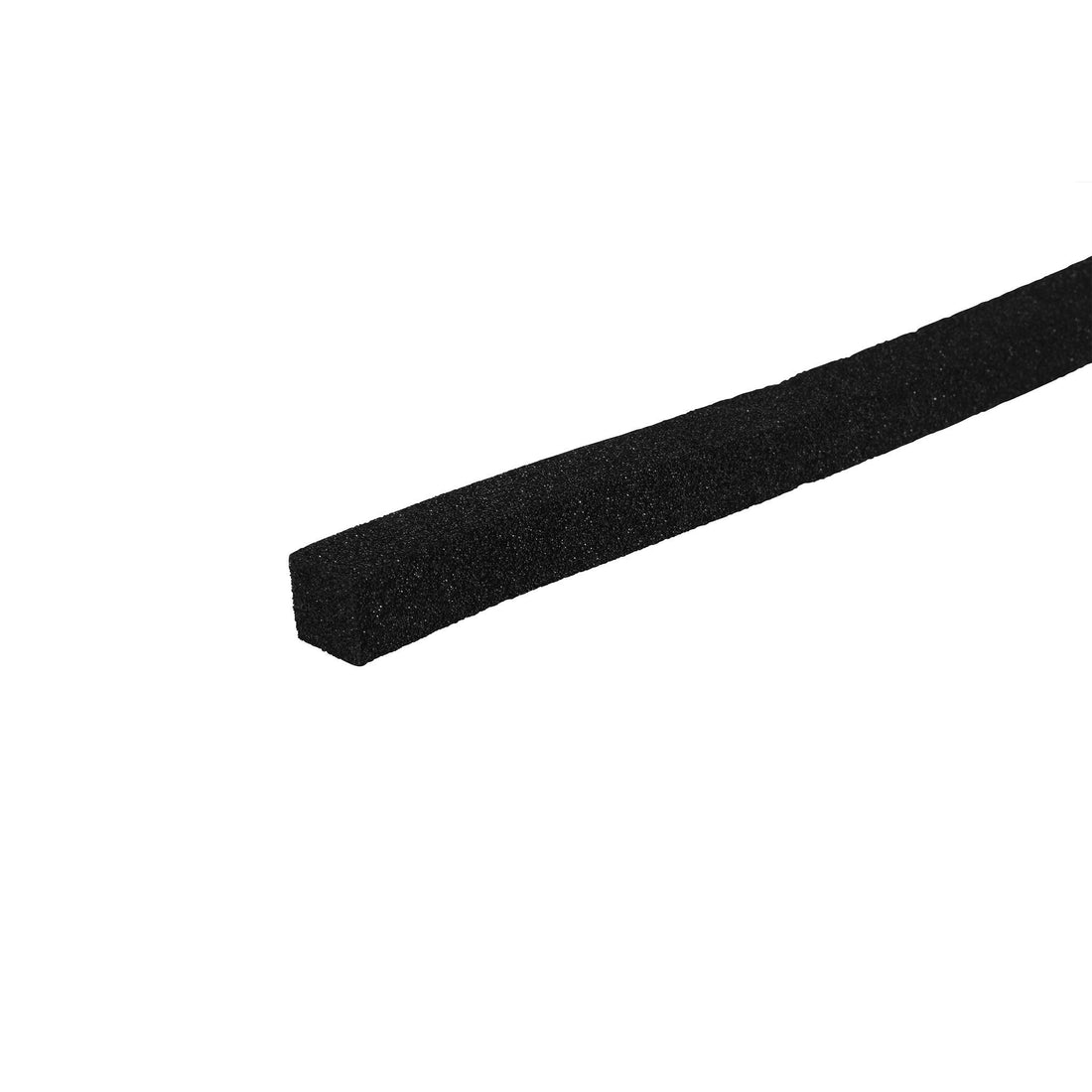
Biyseal Bitumen Impregnated Foam is a preformed, compressible polyurethane foam strip for sealing construction joints, metal cladding and roofing details against draughts, dust and moisture. Instead of relying on an adhesive bead, the bitumen-impregnated foam seals by pressing outward against the sides of the joint.
It is particularly useful where the gap moves or the joint profile makes a conventional bead difficult to maintain. When correctly sized and compressed, the foam accommodates joint movement while maintaining contact with adjoining faces.
Where Biyseal works
- Roof and wall cladding: filling suitable corrugations, roof valleys and sheet-metal junctions to reduce draughts and weather entry.
- Concrete and masonry joints: forming a compressible seal in suitably designed building expansion and connection joints.
- Openings and penetrations: weather and dust sealing around compatible framing and construction details.
Choosing the correct size
Compression is what makes this foam seal. Choose a strip dimension that achieves the required installed compression for the joint width and its exposure. A detail intended only to resist dust does not call for the same compression as one exposed to water. Install into clean, sound joint faces without leaving gaps or discontinuities.
Biyseal is a compression seal, not a universal replacement for a specified waterproofing membrane or liquid joint-sealant system. For exposed work, check the joint design and expected weather exposure before selecting the strip size.
How does compression affect Biyseal performance?
Higher compression increases resistance from dust and draught sealing through to flowing or standing water.
What is the maximum compression?
Do not compress the foam beyond about 90% of its original thickness.
What elongation is stated?
275% in the current product evidence.
Can it be used in concrete expansion joints?
Yes, when sized and compressed for the joint movement and exposure conditions.
- Metal roof and wall cladding.
- Concrete panel joints.
- Brickwork and blockwork.
- Roof valleys, eaves and skylight details.
- Window frames, HVAC ducting and building penetrations.
Biyseal Bitumen Impregnated Foam Physical Properties
| Property | Value |
|---|---|
| Material | Polyurethane Foam Impregnated with Bitumen or Acrylic |
| Density (Bitumen Impregnated) | 30 kg/m³ |
| Density | 96 kg/m³ |
| Identification Force Deflection (IFD) 25% | 200 ± 22 N |
| Identification Force Deflection (IFD) 65% | 360 ± 27 N |
| Resilience | Minimum 20% |
| Tensile Strength (Bitumen Impregnated) | Minimum 172 kPa |
| Tensile Strength | 232kPa |
| Elongation | 275 % |
| Elongation at Break (Unimpregnated) | 275% |
| Tear Strength (Bitumen Impregnated) | Minimum 0.52 kN/m |
| Tear Strength | 903 N/m |
| Elongation After Heat Aging | 225% |
| Tear Resistance After Heat Aging | 869 N/m |
| Shrinkage | 0.94% |
| Cell Size | 55 ± 10 |
| Compression Set | 5.0 |
| Combustibility | Flame did not reach benchmark |
| Recovery | 98% in the first cycle |
| Compression Resistance (20%) | Dust, draughts, vibration |
| Compression Resistance (50%) | Fog, light dampness, slight flowing water, reverberation |
| Compression Resistance (70%) | Flowing water, dust storms |
| Compression Resistance (75%) | Standing water |
| Working Life (Accelerated Aging) | Up to 20 years (application dependent) |
| Sizes | 19mm x 13mm to 75mm x 25mm x 2m |
| Profiles | Corrugated and Trimdek roofing profiles (2m length) |
| Standards Compliance | AS2282-79 |
| Indentation Force Deflection | 1.7 |
| Fire Performance | Flame did not reach benchmark |