
Potential Outcome: Incomplete reaction and insufficient rise in dry sections.
Adheseal Best Practice: Pre-wet the crack path (not flood) to ensure consistent contact water; select Accelerator “B” dosage to achieve reliable gel at site temperature.
Potential Outcome: Resin displacement before foaming, leaving leak pathways open.
Adheseal Best Practice: Increase Accelerator “B” to shorten start time, stage-inject from downstream ports, and reduce injection pressure to favour in-situ foaming and capture.
Potential Outcome: Unfilled voids and intermittent sealing.
Adheseal Best Practice: Tighten port spacing based on element thickness and water path behaviour; inject until adjacent ports show material or flow reduction is observed.
Active water is displacing materials during injection. You need reliable gel and rise before washout while maintaining penetration into hairlines.
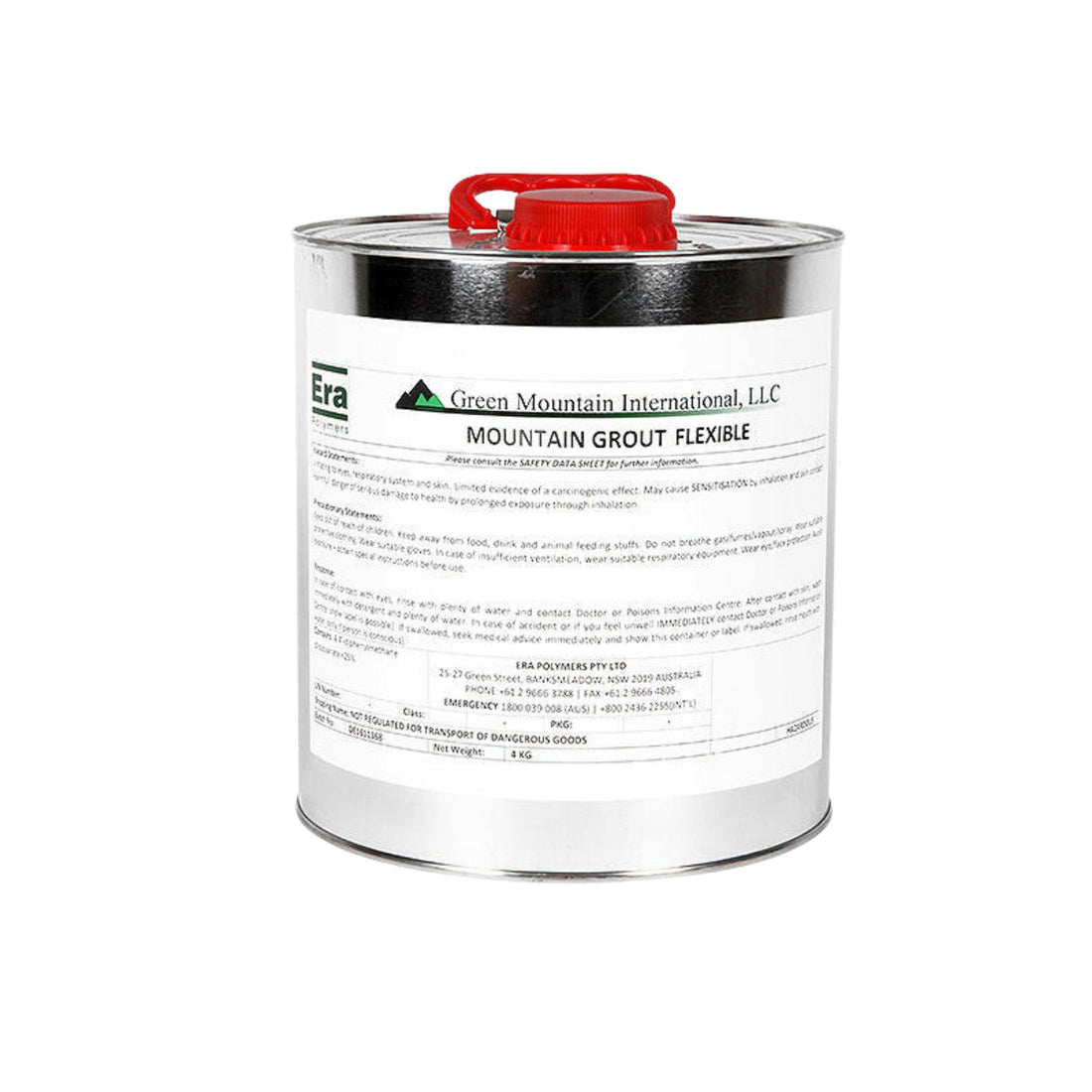
Pump Mountain Grout Flexible as a single component and tune Accelerator “B” to 2.5% for rapid start (≈15 s) and completion (~65 s at 25 °C). Stage injections from downstream to upstream, keeping pressures modest so foaming locks the pathway.
Confirm pre-wetting on very dry sections. Continue until steady backflow or dampening appears at the next port.
Intermittent inflow and seasonal wet/dry cycling cause prior repairs to shrink and open up.
Specify Mountain Grout Flexible for its hydrophobic chemistry and closed-cell structure that retains volume through cycles. Dose Accelerator “B” ~1.25% for controlled rise (start ~50 s, complete ~4 min at 25 °C) to ensure thorough grout development around the penetration.
Map inflow points and port from least to most active. Validate seal by observing reduction in infiltration under normal head.
Multiple leak points with limited possession windows demand fast setup and predictable outcomes.
Single-component pumping streamlines plant and labour. Hydrophobic reaction tracks water to seal beyond visible defects, reducing call-backs and downtime.
Sequence teams by zone, standardise Accelerator “B” dosages per ambient temperature band, and document backflow/pressure response for QA.
Adjusting Accelerator “B” directly controls reaction speed. At 25°C, 1.25% Accelerator “B” starts expansion at 50 seconds, completing in 4 minutes. Increasing to 2.5% Accelerator “B” accelerates this to 15 seconds start and 65 seconds completion.
Yes, the hydrophobic formulation requires water contact to foam and expand. For very dry crack sections, pre-wetting ensures a consistent reaction, but avoid flooding that could wash out the resin.
Yes, the cured grout forms a stable, closed-cell, hydrophobic foam. This material is designed to retain its physical form and resist shrinkage under prolonged wet/dry conditions, ensuring durable water cut-off.
The cured foam has a typical density of 64 kg/m³ and an elongation of 44%, allowing it to handle crack movement. Water absorption is less than 1%, and the material is inert and non-toxic once cured.
| Application | Key benefit | Primary trades |
|---|---|---|
| Seal leaking cracks in concrete structures | Forms a hydrophobic, closed-cell foam that maintains a seal through wet/dry cycles. | Remedial waterproofers, civil contractors |
| Stop infiltration at manholes and vaults | Expands up to 30 times to chase water paths, creating a robust grout curtain. | Asset maintenance, wastewater utilities |
| Restore watertightness at concrete construction or cold joints | Controlled reaction times ensure the resin foams in situ before washout can occur. | Engineers/specifiers, remedial waterproofers |
| Leak cut-off in tunnels, culverts, and dams | Single-component pumping capability accelerates mobilisation and increases on-site throughput. | Civil contractors, infrastructure maintenance |
| Waterproofing elevator pits and parking structures | Provides a durable, inert, non-toxic seal for long-term service without degradation. | Remedial waterproofers, facility maintenance |
Identify leak sources, map water paths, and select port locations to progressively intercept flow. Clean and seal around ports to contain resin during rise.
Start at the lowest/outlet point and work upstream. Mark damp areas for pre-wetting if required.
Use close spacing in thick sections and where flow paths branch. Prepare for staged injections.
Dose Accelerator “B” into the base resin before pumping to suit site temperature and leak rate.
~1.25% “B” for start ~50 s and completion ~4 min at 25 °C, promoting deeper penetration before rise.
~2.5% “B” for start ~15 s and completion ~65 s at 25 °C to minimise washout risk.
Pump as a single component. Begin from the lowest/most downstream port and progress sequentially to upstream ports.
Use modest pressures to favour in-situ foaming and prevent resin bypass.
Watch for backflow or moisture changes at adjacent ports; proceed once the path is saturated.
Observe leak reduction under the prevailing head. Remove ports and make good once performance is confirmed.
Confirm no visible inflow; monitor for rewetting after pressure equalises.
Record port sequence, dosages, and outcomes for asset records.
Wear chemical-resistant gloves, eye protection, and suitable workwear to avoid skin and eye contact.
Use in well-ventilated areas. For enclosed spaces, ensure adequate airflow and comply with confined-space protocols if applicable.
Proper surface preparation and moisture management are critical for effective leak sealing.
Surface prep: Identify the water path and install injection ports to intercept the flow. Clean surfaces around ports for proper sealing. Pre-wet adjacent dry areas to ensure water contact without causing washout.
Primer: Not required. Focus on ensuring water presence and correct port placement for effective injection.
Surface prep: Map the seepage area, remove loose fines, and ensure a consistent moisture film is present. Consider a moderate Accelerator “B” dosage to allow deeper penetration before foaming.
Primer: Not required. Maintain steady injection pressure and monitor for backflow at adjacent ports to ensure full crack saturation.
Surface prep: Port along the joint line to intercept leak planes. Remove loose laitance at port faces and seal the surface to contain the resin during expansion.
Primer: Not required. Select Accelerator “B” dosage based on the observed inflow rate and the ambient temperature.
Surface prep: Expose annular paths, install ports to encircle the penetration, and ensure moisture contact along the leak path. Clean the surface for sealant adhesion around port collars.
Primer: Not required. Stage injections to build a complete grout curtain around the penetration, ensuring full encapsulation.
| Property | Value |
|---|---|
| Base Chemistry | Hydrophobic polyurethane |
| Curing System | Single-component |
| Colour | Amber (base resin), clear (Accelerator B) |
| Density | 64 kg/m³ |
| Viscosity Base Resin | 500 mPa·s |
| Viscosity Accelerator B | 25 mPa·s |
| Flash Point Base Resin | >121°C |
| Flash Point Accelerator B | 107°C |
| Tensile Strength | 0.20 MPa |
| Shear Strength | 0.12 MPa |
| Elongation | 44% |
| Expansion Ratio | Up to 30x |
| Cure Rate | Start ~15 s, complete ~65 s (with 2.5% Accelerator B at 25°C) |
| Water Absorption | <1% |
| Substrate Compatibility | Cracked/damp concrete, construction joints, manholes, tunnels, dams, vaults, elevator pits, parking structures |
| VOC Content | No VOCs (100% solids) |
| Standards | ASTM D-1638 (foam density), ASTM D-1475 (specific gravity), ASTM D-92 (flash), ASTM D-1622 (density), ASTM D-638 (tensile/elongation), ASTM C-273 (shear), ASTM D-2842 (water absorption) |